






There are two Machu Picchus. There is the one in the photographs, shared with a thousand other people on a midday terrace in hard sun. And there is the other one, the citadel in the first grey light with the cloud still lifting off the ridges and almost nobody there. The second one is the reason to come, and it is entirely possible to have. It comes down to four things: when you arrive, how you arrive, where you sleep the night before, and who is standing beside you reading the stones.
Most travelers get the first Machu Picchu by default, because they do what is easy: a long day up from Cusco, arriving at the busiest hour, a guide shared with a crowd, and back down again before they have understood what they were looking at. The whole of our work is arranging the other version. None of it is difficult once you know the levers, and none of it requires you to be an archaeologist. It requires knowing what to do, and when.
The hours that change everything
The single most important decision at Machu Picchu is the time on your ticket. The site fills from the late morning into the early afternoon, when the day groups arrive together off the Cusco trains, and it empties again as the afternoon goes on. The magic lives at the edges of the day. With one of the first entries you can stand on the upper terraces in genuine near-solitude, the cloud moving through the saddle between the peaks, the light soft and grey before it sharpens. In the last hours of the afternoon the crowds thin again and the stone turns gold.
We build the visit around those quiet windows rather than against them, and we choose the season with the same care. The wettest months bring the emptiest citadel, if you do not mind a little cloud, and the shoulder seasons give you the best balance of clear skies and breathing room. The point is simple: the same ruin, seen at the right hour, is a completely different place.
Arriving rested
The common mistake is to throw the whole thing into one exhausting day from Cusco. You arrive at altitude, tired and rushed, and meet the wonder of your life with nothing left in the tank. The fix is to come the afternoon before and sleep close, and there are three ways we do it well.
The first is to spend the night in the Sacred Valley, lower and gentler than Cusco, and take a morning train up rested and acclimatized from Ollantaytambo. The second is to stay at the foot of the mountain in Aguas Calientes, where the Inkaterra Machu Picchu Pueblo sits in its own cloud-forest gardens with a spa and the sound of the river, a calm base for an early start. And the third, for the one true indulgence, is the Sanctuary Lodge by Belmond, the only hotel at the citadel gate itself. Stay there and you are already at the top: you walk in before the first bus has left the town below, into a Machu Picchu that is, for a while, almost yours.
How you come up matters too, and it is its own small pleasure. The train through the Urubamba gorge is part of the experience, not just the transfer, and we wrote a whole piece on the great train journeys for exactly that reason.
The citadel you came for is the empty one at first light. That is the one we arrange.
The citadel with the right guide
A private guide is what turns Machu Picchu from a crowded monument into a story you can follow. Walking it privately, you set the pace, you linger at the windows that catch you, and you step out of the way of the groups rather than shuffling along inside one. The best of our guides are historians and archaeologists who read the masonry the way others read a page.
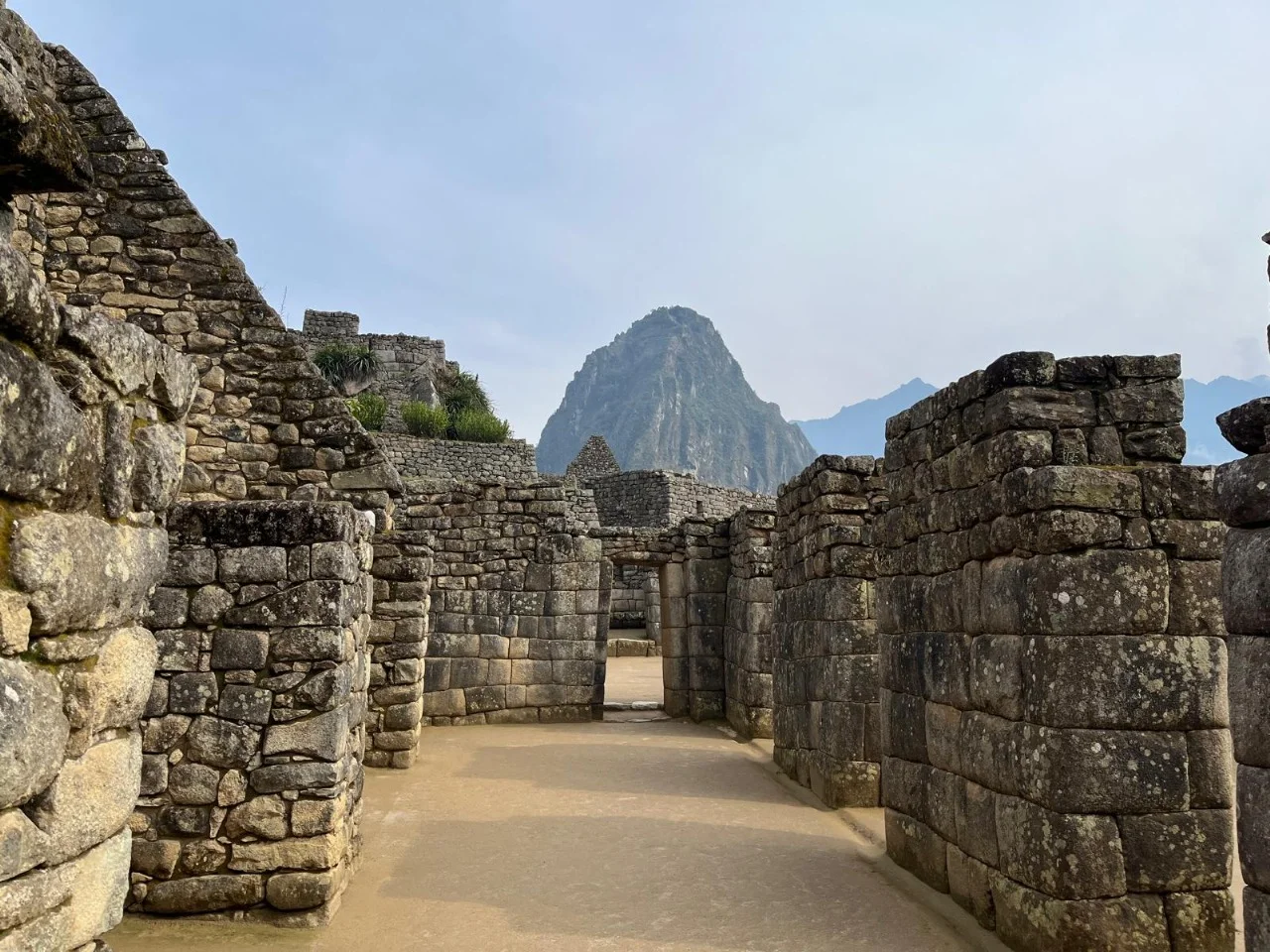
They will show you the thing the photographs never quite carry: stone cut so cleanly that a blade will not slip between the blocks, fitted without mortar and standing true for six hundred years through earthquakes that have toppled far younger walls. You learn to see the temples aligned to the solstice, the spring that still runs through its carved channels, the terraces that fed a city on the edge of a cliff. With the right person beside you, the place stops being a backdrop and becomes the most sophisticated thing human hands made on this continent.
Beyond the famous terrace
The classic postcard is only the start. Huayna Picchu, the sharp peak that stands over the city in every photograph, can be climbed by separate permit for the vertiginous view back down, a steep hour for a head for heights. Machu Picchu Mountain, higher and far quieter, rewards the longer-legged with the widest view of all. There is the Sun Gate, where the Inca Trail makes its final descent and the city first appears, and the Inca Bridge on its sliver of ledge across a cliff face.
The citadel now runs on assigned circuits and timed entries, which sounds bureaucratic and is in fact a gift, because chosen well it lets you see what matters without the press of people. We pick the circuit and the hour to fit how you want to experience the place, and we handle the moving parts, including the citadel entry ticket itself, which since early 2026 is arranged separately from the Inca Trail permit. You should never have to think about any of it. You should only have to look.
The quiet way, arranged
Pulling those four levers together, the right hour, a rested arrival, the right bed the night before, and the right person at your side, is the entire craft of doing Machu Picchu well. Done badly, it is a crowded morning you endure once and never repeat. Done with care, it is the quiet, unhurried meeting with a wonder that people carry for the rest of their lives. That second version is the only one we are interested in arranging.
Tell us how you like to travel, and we will design the day around you, the season, the hour, the bed and the guide, so that when you walk through the gate, the citadel is, for a little while, almost yours alone.