






Altitude
~2,800 m, below Cusco
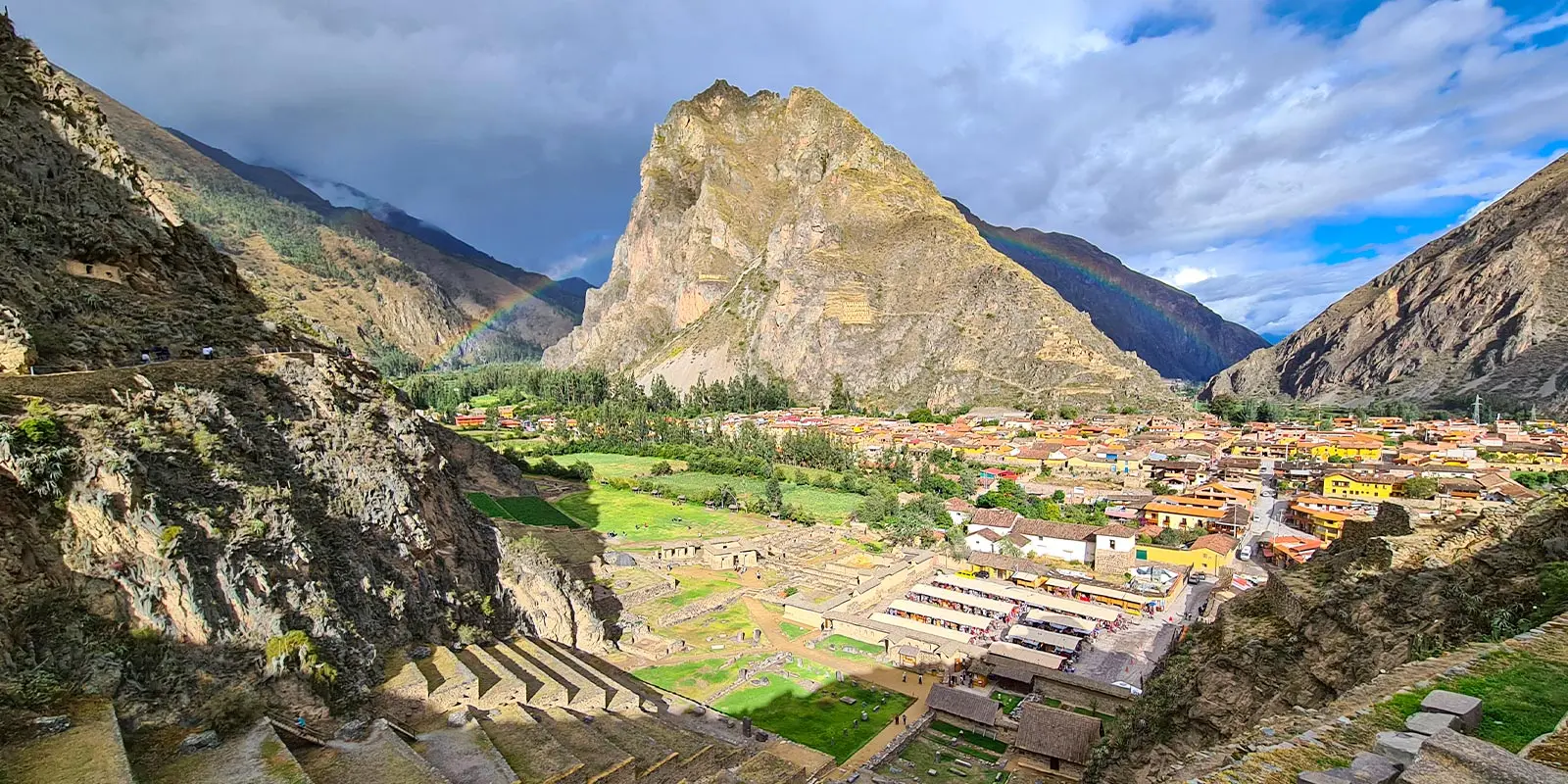
Lower, greener and gentler than Cusco, the agricultural heart of the Inca world and the luxury heartland of Peru. The place to slow down, acclimatize, and stay in the finest hotels in the country.
Strung along the Urubamba river between Cusco and Machu Picchu, the Sacred Valley was the breadbasket and the garden of the empire, its slopes carved into terraces that still climb the mountainsides today. It is warmer and several hundred meters lower than Cusco, which makes it both the lushest corner of the southern Andes and, conveniently, the smartest place to begin a trip and let your body adjust to the altitude.
It is also where Peru's finest hotels are: a string of resorts and country houses tucked among the fields and the ruins, the reason so many travelers now base themselves here and treat Cusco as a day out rather than the other way around. Add the great market towns, the salt pans, the weaving villages and a gentle, golden quality of light, and the valley becomes the part of the trip people are most reluctant to leave. This is the guide to all of it.
The valley is a string of villages, each with its own character, that we link into private days at whatever pace suits you.
A dramatic Inca citadel of terraces and temples high on a ridge, and below it a famous market town of textiles, silver and ceramics.
A living Inca town on the original street grid, watched over by a great terraced fortress, and the station where the train to Machu Picchu departs.
A weaving village of natural dyes and backstrap looms, with a colonial church raised on Inca walls and long views across the high plain.
Thousands of small salt ponds stepping down a hillside in white and ochre, fed by an ancient spring and still worked by local families today.
Vast concentric terraces sunk into the earth like an amphitheater, an Inca agricultural laboratory of stacked microclimates.
White-water rafting on the Urubamba, horseback rides through the fields, hikes to quiet ruins, and at dawn the valley seen from a hot-air balloon.
The honest, practical detail, from a team based an hour up the road in Cusco.
The valley sits about an hour to an hour and a half by road from Cusco, and a similar distance from Cusco airport, which is why we so often drive new arrivals straight here on landing rather than up into the city. The road drops down through Chinchero or Pisac with the valley opening below, a beautiful first hour in Peru.
From the valley, the train to Machu Picchu leaves from Ollantaytambo, so the geography works neatly: arrive, acclimatize and explore the valley, then take the train on to the citadel, and only afterward head up to Cusco. It is the route we build most southern trips around.
As with the rest of the southern highlands, the dry season from May to September is the classic window, with warm days, cold clear nights and reliable weather for the markets, the ruins and the river. The valley floor is mild and sunny by Andean standards, and the famous golden afternoons are at their best.
The green season from November to March brings rain, heaviest in January and February, but also turns the terraces an electric green and empties the sites of crowds. April and October are gentle shoulder months. Because the valley is lower than Cusco, it tends to feel a degree or two kinder whenever you come.
This is the valley's quiet superpower. The valley floor around Urubamba and Ollantaytambo sits near 2,800 meters, several hundred meters below Cusco, and that difference matters more than it sounds when you have just flown in from sea level. Sleeping lower for the first nights lets your body adjust far more comfortably, and it is the single best thing you can do to avoid feeling rough on day one.
So rather than send you up to high Cusco straight off the plane, we usually settle you in the valley first, keep the first day easy, and bring you up to the city later in the trip once you are well adjusted. One note for planners: a few valley spots, Chinchero among them, actually sit higher than the floor, so where you sleep matters, and we choose accordingly.
Two days is the comfortable minimum, enough for the markets and ruins of Pisac and Ollantaytambo, the salt pans and Moray, and a gentle first day to acclimatize. Three lets you add the active side, rafting, riding or a balloon at dawn, or simply slow right down and enjoy a hotel that deserves the time. Many of our travelers, having planned two nights, wish they had booked more.
This is where Peru's best hotels are, full stop: a handful of country resorts and converted haciendas spread between Urubamba, Yucay and Ollantaytambo, with gardens, spas, big mountain views and the space to breathe that Cusco's old center cannot offer. Staying in the valley and treating the city as a day out is, for many travelers, the more relaxing way to do the south. We work across the finest four and five star houses here and match the right one to your pace, your tier and your route on to Machu Picchu.
The valley is best taken slowly, privately, and away from the market-day crowds.
We start you here, low and easy, so the rest of the high country, Cusco, Rainbow Mountain, the lake, comes once your body is ready, not before.
The resorts and haciendas that make the valley the luxury heartland of Peru, chosen to your taste and your tier.
A private morning with a master weaver in Chinchero, the salt families at Maras, a ruin before the buses arrive. The valley behind the market stalls.
Rafting, riding and a dawn balloon for some, a spa and a long lunch with a view for others, often within the same family or couple.
The valley anchors almost every southern trip, as the acclimatization base and the gateway to Machu Picchu. A few good places to start:
The valley is also rich for living cultures, its weaving and farming communities, and a gentle wellness base.
Quiet hours, private archaeologist guides, and luxury suites overlooking the scenery.