



Altitude
3,400 m, go gently at first
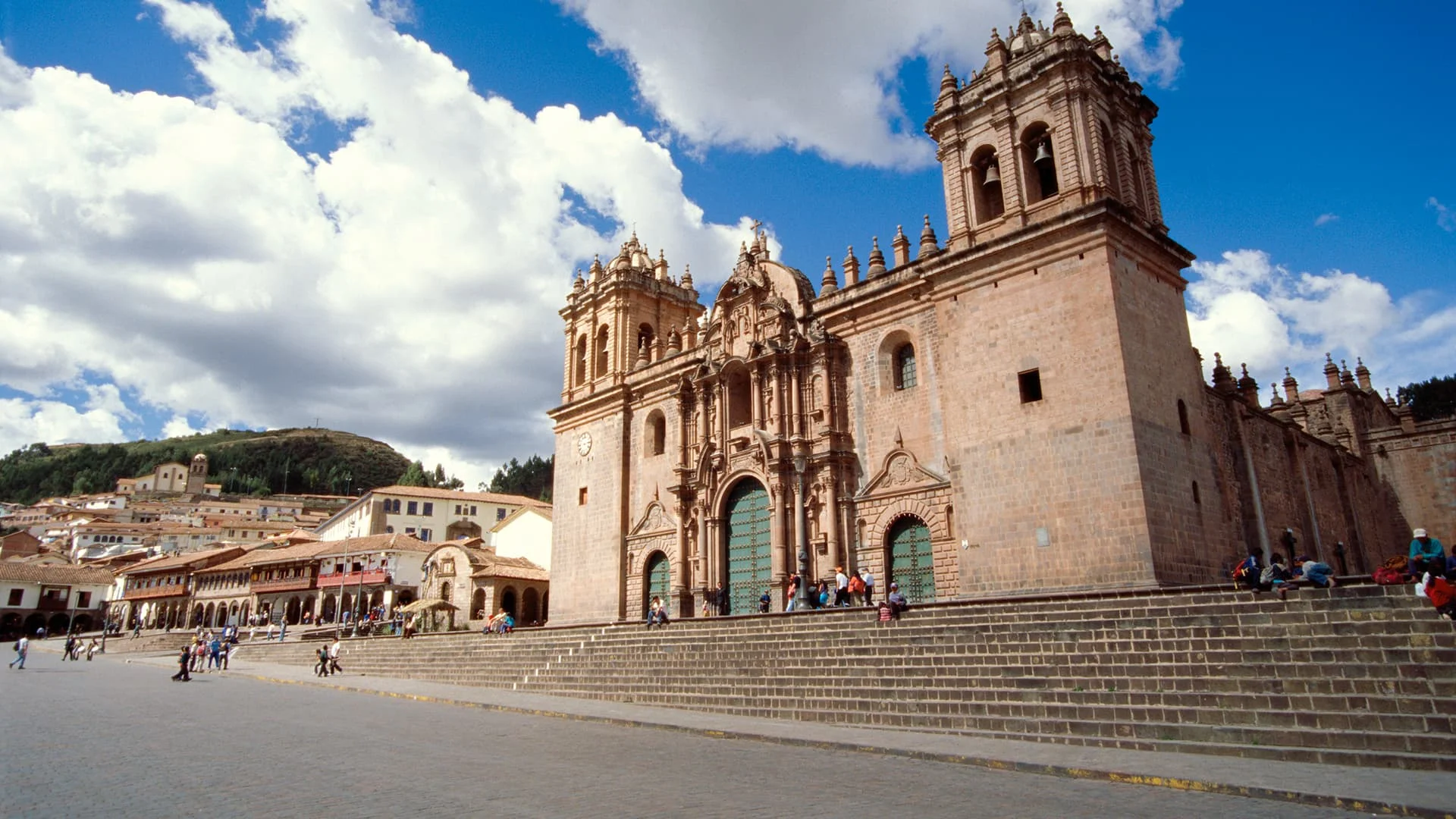
The old capital of the Inca empire, where two civilizations sit one on top of the other, and the gateway to almost everything in the south. Here is the city in full, and how to do it well.
The Inca called it Qosqo, the navel of the world, and made it the capital of an empire that ran four thousand miles down the spine of South America. When the Spanish arrived they did not erase the city so much as build on it, raising cathedrals and mansions directly onto the Inca walls, which is why Cusco feels like two cities pressed into one. Walk a single lane and you pass a baroque doorway set into masonry a thousand years older, fitted so finely it has outlasted every earthquake since.
It is a living city, not a museum: markets and festivals, a serious and growing food scene, artisan quarters and a constant Andean pulse beneath the colonial surface. It is also, for most travelers, where the southern trip begins, the launch point for the Sacred Valley, Machu Picchu, Rainbow Mountain and the road to Lake Titicaca. This guide covers the city itself, and how we arrange it.
Cusco rewards slow walking. These are the places we build a private day around, in the city and on the hills that ring it.
The grand colonial heart of the city, ringed by arcades and churches, with a vast Cathedral built from stones carried down from the fortress above.
The Inca Temple of the Sun, once sheathed in gold, with the convent of Santo Domingo raised on its perfect curved walls. The clearest image of the two Cuscos in one place.
On Hatun Rumiyoc street, a single block cut to fit its neighbors on twelve faces without a sliver of gap, the most famous piece of Inca stonework in the city.
The steep artisan quarter, all whitewashed walls and blue balconies, workshops and small galleries, and the best views back over the rooftops at dusk.
The city's working market, fruit and bread and herbs and juice stalls, the everyday Cusco and a wonderful, unstaged way to read the place.
The megalithic fortress on the hill above the city, built from limestone blocks the size of trucks, with Q'enqo, Puca Pucara and the springs of Tambomachay close by.
The honest, practical detail, from a team that lives and works in Cusco.
Almost everyone flies in. The hop from Lima takes around eighty minutes and there are frequent daily departures, with some additional flights from Arequipa and the Lake Titicaca area. There are very few direct international flights, so most trips route through Lima, and we usually pair a Cusco arrival with a night or two in the capital at the start or end.
The thing to know is that you land straight at 3,400 meters, higher than many people have ever been, so the arrival itself needs handling with care. Rather than dropping you into the thin air of the city to fend for yourself, we often transfer you on landing down into the lower Sacred Valley to acclimatize first, then bring you back up to Cusco once your body has adjusted. More on that below.
The dry season, from May to September, is the classic window: blue skies, cool clear nights and the most reliable weather for everything around the city. It is also the busiest, and it carries the calendar's great spectacle, Inti Raymi, the festival of the sun staged each June at Sacsayhuaman, when the city fills and rooms go early.
The green season, from November to March, is wetter, especially January and February, but the hills turn brilliant and the crowds thin out, and there is a real pleasure to Cusco under passing rain. April and October are lovely shoulder months that catch the best of both. Whatever your dates, we plan the days around the weather rather than pretending it away.
This is the single most important thing to plan for. At 3,400 meters Cusco is high enough that many visitors feel the altitude on the first day, a little breathless, a headache, poor sleep. It usually passes within a day or two, and there is a great deal we can do to soften it.
Our preferred approach is to go down before going up: spend the first nights in the lower Sacred Valley, several hundred meters below the city, where the air is kinder, and only settle into Cusco itself once you have adjusted. Beyond that, the basics genuinely help, an easy first day, plenty of water, lighter meals, the local coca tea, and no rushing. We pace your itinerary so the high days come once you are ready for them, never on arrival.
For the city alone, two days is comfortable: one for the center and the markets, one for the ruins on the hills above, with time to wander San Blas and eat well. But Cusco is rarely a destination on its own. It is the hub from which you reach Machu Picchu, the Sacred Valley, Rainbow Mountain and more, so in practice most travelers spend the better part of a week in and around it. We usually fold the city into the start and the end of the southern loop, with the valley and the citadel in between.
The loveliest places to stay are in and around the historic center, many of them former colonial mansions and convents built over Inca foundations, with stone courtyards and serious comfort behind quiet doors. The San Blas slopes are charming and central but steep, worth knowing if stairs at altitude are a concern. We work across the finest four and five star houses in the city and match the right one to your pace, your tier and how much you mind the climb.
A city this layered is wasted on a rushed group tour. We slow it down and open it up.
Your own expert who can tell the Inca wall from the colonial one and the story of both, turning a pretty old town into a thousand years of history.
Converted mansions and convents in the heart of the old city, stone and silence behind the doors, rather than a chain hotel on the edge of town.
We sequence the trip so the altitude works for you, usually the lower valley first, and an easy first day in the city, not a forced march.
A quiet hour in a church or a private collection, a workshop with a master weaver, a table the guidebooks have not found. The city beyond the obvious.
Cusco is the hinge of the south, so nearly every journey runs through it. A few good places to start:
Cusco is also Peru's quiet rising food city. See our gastronomy experience, or the living cultures of the surrounding Andes.
Quiet hours, private archaeologist guides, and luxury suites overlooking the scenery.