







Altitude
2,430 m, lower than Cusco
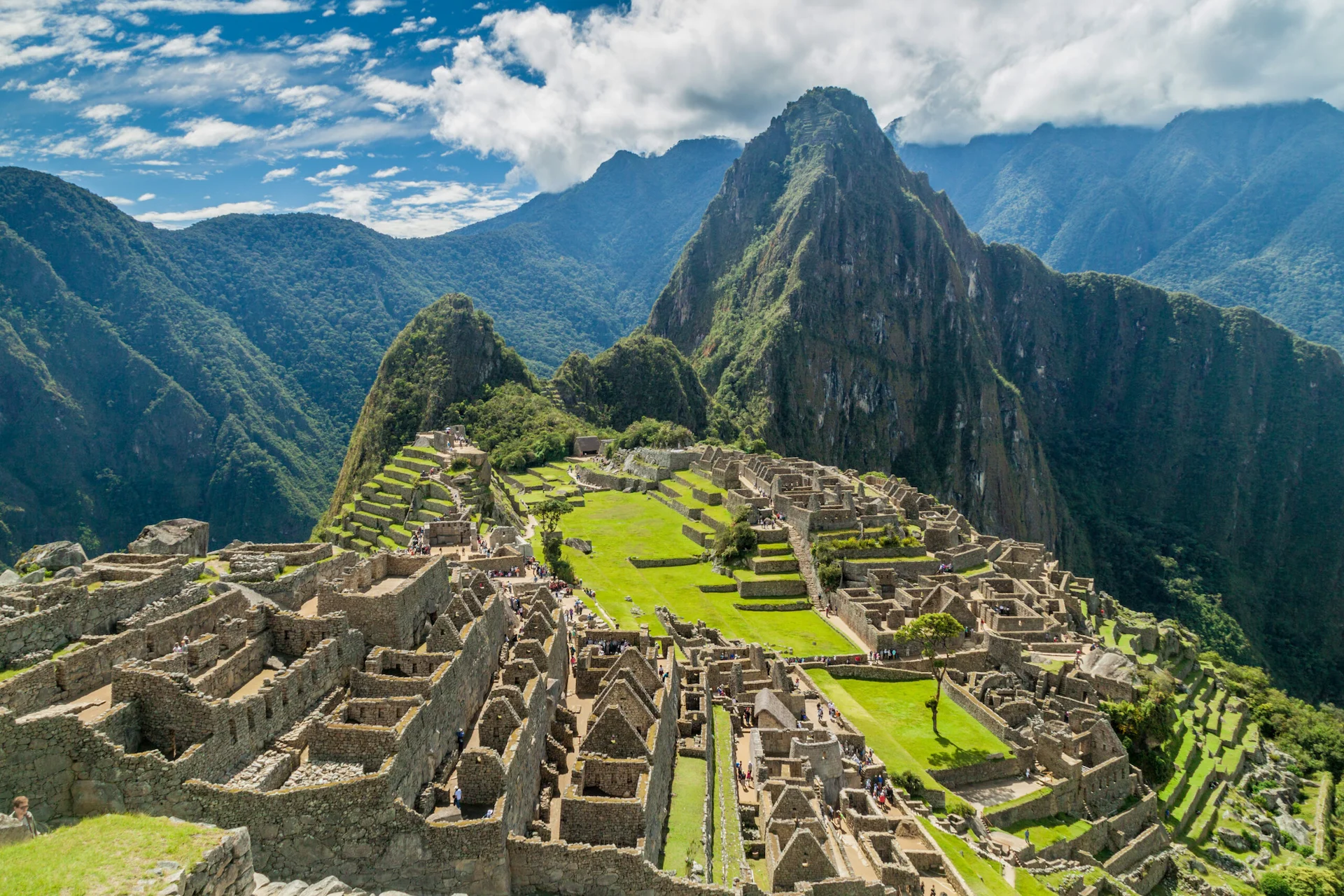
The complete luxury guide to the lost city in the clouds: its story, how to get there, when to go, the tickets and circuits, where to stay, and how to see it the right way, private and unhurried.
Machu Picchu is the reason most people come to Peru, and it earns the journey. Built around 1450 as a royal estate for the Inca emperor Pachacuti, abandoned barely a century later and never found by the Spanish, it lay under cloud forest until 1911. What survives is astonishing: temples, houses and fountains laid out almost exactly as they were left, terraces falling hundreds of feet into the gorge, and granite fitted so precisely that a blade will not slip between the blocks, all of it raised without iron, the wheel or mortar, on a knife-edge ridge between two peaks.
It is also one of the busiest sights in South America, which is exactly why how you visit matters so much. This guide covers everything you need, the practical and the beautiful, and then how we arrange it so that you meet the citadel in the quiet light rather than the midday crowd.
Machu Picchu is not one sight but several, and which you can reach depends on the entry circuit and the permits, all of which we arrange for you.
The temples, the royal quarter and the agricultural terraces, read by a private guide who brings the astronomy and the engineering of a vanished empire to life.
The sheer peak that rises behind the ruins in every photograph, climbed by a dizzying Inca stairway for the aerial view down onto the whole site. A separate, limited permit.
The higher, quieter climb on the opposite side, longer underfoot and far less crowded, with a vast view over the citadel and the river looping far below.
Inti Punku, the high pass where the Inca Trail makes its entrance and the citadel first appears below. A gentle walk up from the ruins, with one of the great first sights.
The finest stonework on the site, curved and carved and aligned to the solstices, the work of astronomers as much as builders.
A vertiginous stone causeway along a cliff face that once guarded the secret western approach, a short, dramatic walk from the main ruins.
The honest, practical detail, drawn from running this trip out of Cusco for years.
There is no road to Machu Picchu, which is part of the magic and most of the logistics. Almost everyone arrives the same way: a flight from Lima to Cusco, then down into the Sacred Valley, and a train along the Urubamba river to the little town of Aguas Calientes, also called Machu Picchu Pueblo, at the foot of the mountain. From there a short shuttle climbs the switchbacks to the citadel gate in around half an hour.
The train is the heart of the trip and runs in tiers. The panoramic, glass-roofed Vistadome is the lovely standard, while the Hiram Bingham is the luxury train proper, with white-cloth dining, a bar car and live music, an occasion in itself rather than simply a way to get there. Most departures leave from Ollantaytambo in the valley, which is why we usually base you there or nearby the night before.
The other way in is on foot. The classic Inca Trail walks four days through the mountains and enters through the Sun Gate at dawn, and the Salkantay and Lares routes arrive by other beautiful paths. Whichever you choose, we handle the connections so the day flows without a single anxious moment.
Machu Picchu is open year-round, and there is no truly bad time, only trade-offs. The dry season runs roughly from May to September and brings the clearest skies and the classic postcard views, which is why it is also the busiest, with July and August at the peak. September is our quiet favorite: settled weather, the crowds thinning, and the light beautiful.
The green season, from November to March, is wetter but lush and dramatic, with mist pouring through the ruins and far fewer people, and January and February are the rainiest months. One date to plan around: the Inca Trail itself closes every February for maintenance, although the citadel stays open and can still be reached by train. We will tell you honestly what to expect for your exact dates and build the days around the weather rather than against it.
You can see the citadel in a single, full visit, and many trips do exactly that. But the place rewards a little more time. Our strong preference is an overnight in Aguas Calientes so that you can visit in the soft late afternoon, sleep at the foot of the mountain, and return at first light the next morning, when the cloud is still lifting and the day-trippers have not yet arrived. That second, quiet hour is the Machu Picchu people dream of, and it is the single biggest difference between a good visit and an unforgettable one.
Entry to Machu Picchu is now tightly managed, and getting it right takes planning. Tickets are timed, numbers are capped each day, and since 2024 visitors follow fixed circuits, each one a set route through a different part of the site. Choosing the circuit that matches what you most want to see, and securing a good entry time, makes a real difference, and the best slots sell out well ahead.
The two peak climbs, Huayna Picchu and Machu Picchu Mountain, require their own separate permits, limited in number and often gone months in advance, so they have to be booked early or not at all. And an important recent change for trekkers: since January 2026 the Inca Trail permit no longer includes entry to the citadel itself, so the trek permit and the Machu Picchu ticket must be booked together. We handle every part of this for you, the tickets, the times, the circuits and the climbs, so nothing is left to chance at the gate.
There are really two choices. The first is to stay in the Sacred Valley, in Ollantaytambo or Urubamba, where the finest hotels in the region are, and visit Machu Picchu as a long day trip by train. The second, and the one we usually recommend for the full experience, is to spend a night down in Aguas Calientes at a cloud-forest hotel at the very foot of the citadel, which is what makes the late-afternoon and dawn visits possible.
We work across the best houses in both, from four star to five, and often combine them: a valley base for comfort and acclimatization, plus one night below the citadel for the quiet hours. The exact pairing depends on your dates, your pace and your tier, and we arrange it all privately.
Most people see the citadel in a crowded few hours in the middle of the day. We arrange it the other way around.
Your own expert guide and a visit timed for the softer hours, late afternoon or the first buses at dawn, when the citadel is at its emptiest and most extraordinary.
The glass-roofed Vistadome along the river, or the Hiram Bingham luxury train with dining, a bar car and live music, the journey made part of the pleasure.
A cloud-forest hotel at the foot of the mountain, so you are first up and last down rather than racing a day train back to Cusco.
We secure the right tickets, entry times, circuits and climb permits months ahead, with the acclimatization built in so the whole trip feels effortless.
Almost every journey we run reaches Machu Picchu, from a short essential trip to the grand tour. A few good places to start:
Prefer to walk in? See the Inca Trail and trekking experience, or our private Machu Picchu tours.
Quiet hours, private archaeologist guides, and luxury suites overlooking the scenery.