





Altitude
3,810 m, above Cusco
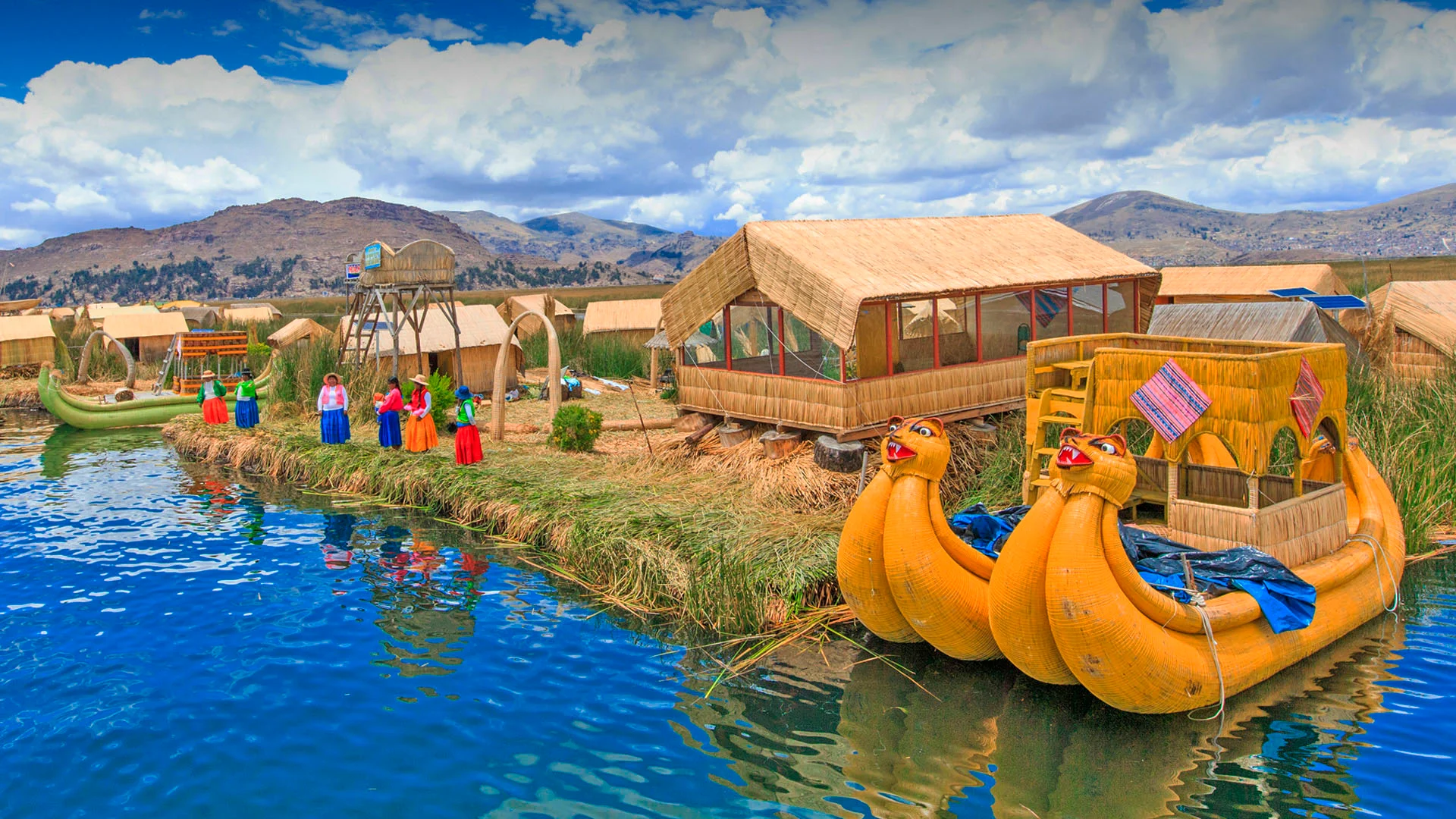
The highest navigable lake on earth, an inland sea of impossible blue scattered with islands, some of them floating, all of them home to communities who have lived this way for centuries. Here is the lake, and how to see it well.
At 3,810 meters, Lake Titicaca is the highest navigable lake on the planet, a body of water so vast it has waves and horizons and weather of its own, shared between Peru and Bolivia and ringed by the bare, luminous plain of the altiplano. In Andean belief it is the cradle of creation, the place the sun first rose and the first Inca emerged, and something of that weight is still in the light on the water.
Its real wonder, though, is human. The Uru people live on islands they weave from reeds and anchor to the lakebed, the knitters of Taquile keep traditions recognized the world over, and the Aymara and Quechua communities of the shore and the islands carry on a way of life that has barely changed. Cold, bright, slow and deeply lived in, Titicaca is the quietest and most moving stop on many Peru trips. This is the guide to it.
A visit to Titicaca is mostly time on the water, moving between islands, each its own world, with the altiplano and its ruins on land.
Dozens of islands woven entirely from totora reed, soft underfoot and anchored to the shallows, home to the Uru for generations. Strange, beautiful and entirely real.
A steep, terraced island where the men knit and the textiles are honored by UNESCO, with long Mediterranean-blue views and a deep, unhurried calm.
The largest island, quiet and rarely visited, ringed by farms and crowned by two ancient temples, and the heart of the lake's homestay tradition.
A single small island given over to one peaceful hotel, the most secluded and comfortable way to sleep out on the lake itself.
The lakeside city and folk capital of Peru, at its most alive during February's vast Candelaria festival of music, costume and dance.
Tall stone funerary towers on a peninsula above a second lake, raised by the pre-Inca Colla, a haunting half-day from Puno.
The honest, practical detail for the high, slow heart of the Peruvian south.
The lakeside city of Puno is the base, and there are three good ways to reach it. The quickest is to fly into Juliaca, the nearest airport, around forty-five minutes from Puno, with connections through Lima, Cusco or Arequipa. The most beautiful is the scenic train from Cusco, a full day's glide across the altiplano in a classic carriage, an experience in its own right and one of the great rail journeys of South America.
The third option is the road from Cusco, a long but rewarding drive often called the route of the sun, breaking the journey at the painted church of Andahuaylillas, the temple of Raqchi and the high pass of La Raya at over 4,300 meters. We will recommend the option that fits your time, your pace and how you feel about the altitude.
The dry season from May to October is the clear window, with deep blue skies over the water and crisp, cold nights, the lake at its most photogenic. This is also when the altiplano is coldest after dark, so warm layers matter. The green season from November to March is milder by day but wetter, and quieter on the islands.
One date worth knowing: in early February, Puno hosts the Virgen de la Candelaria, one of the largest folk festivals in South America, a riot of costume, brass and dance recognized by UNESCO. It is spectacular, and the city fills, so it is worth either planning around or planning into, but never stumbling upon by accident.
This is the key piece of planning. At 3,810 meters the lake sits higher than Cusco, so it is not a place to arrive cold from sea level. We almost always position Titicaca later in a trip, after you have acclimatized in the lower Sacred Valley and Cusco, so that by the time you reach the altiplano your body is ready for it and you can simply enjoy the lake rather than struggle with the air.
Handled this way, most travelers feel fine here. The usual sensible habits still apply, an easy pace, plenty of water, warm clothes for the nights, and we build the day on the water to be restful rather than rushed.
The islands are the reason to come, and they are very different from one another. The Uros are the famous floating reed islands, extraordinary and worth seeing, though also the most visited, which is why we go early and arrange a genuine, respectful encounter rather than a staged stop. Taquile is a real, lived-in farming island with its celebrated weaving and knitting and some of the loveliest views on the lake. Amantani is larger, quieter and the home of the community homestay, for travelers who want to go deeper.
For comfort out on the water itself, a small private island with a single hotel offers the most secluded night on the lake. We pair the islands you visit, and where you sleep, to how immersive or how restful you want the experience to be.
Two days is the natural length, one to reach the lake and see Puno or Sillustani, and a full day out on the water among the islands, with a night in between. As for where to sleep, there are three characters: a comfortable lakeside hotel near Puno, the secluded private island out on the lake, or a community homestay on Amantani for the most authentic and humble of nights. We work across the finest houses on the shore and match the right one to your tier and your appetite for immersion.
The lake is too special, and too sensitive, for a crowded boat and a staged photo stop.
We bring you here after you have acclimatized, so the altitude is a non-event and the lake is pure pleasure.
Where it suits, we make the journey from Cusco part of the experience, a full day across the altiplano in a classic carriage.
A private boat, an early start ahead of the crowds, and real, fairly arranged contact with the island communities, never a staged performance.
For those who want it, a night on the private island or a humble homestay on Amantani, the lake at dawn entirely your own.
Titicaca pairs naturally with Cusco and Machu Picchu, and opens the route on toward Arequipa or Bolivia. A few good places to start:
The lake is one of Peru's deepest living cultures. We arrange real, respectful community contact.
Quiet hours, private archaeologist guides, and luxury suites overlooking the scenery.