







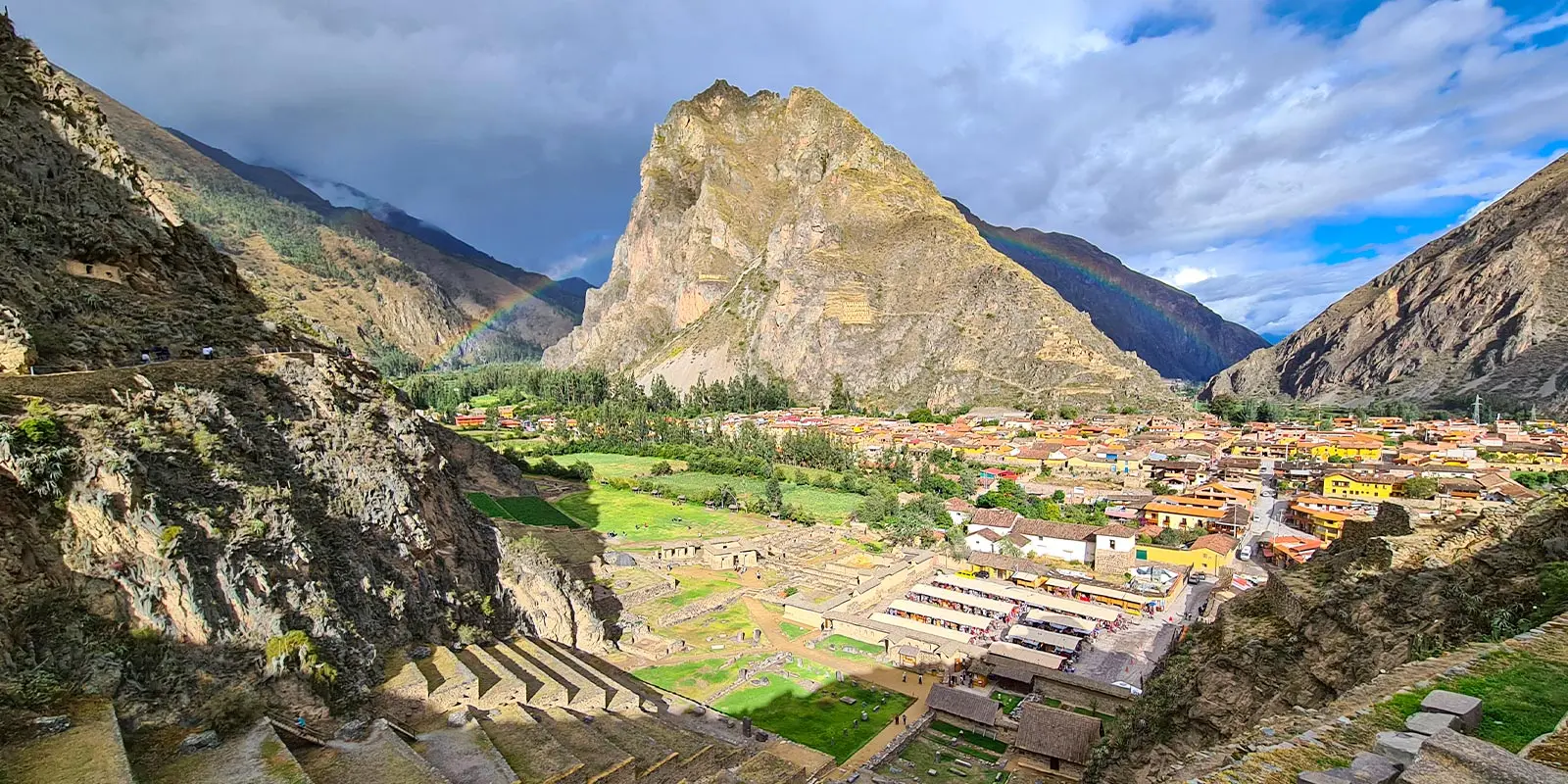
Most travelers treat the Sacred Valley as a corridor to Machu Picchu, and that is the mistake. The valley is not the thing you pass through on the way to the wonder. It is, for many of our travelers, the part of the trip they end up loving most: lower and gentler than Cusco, greener, slower, the Urubamba river running between terraced hillsides and snow peaks, with the living heart of the Inca world strung along it. Give it real time and it gives you the calm the rest of the trip is built on.
It is also, quietly, where the best places to stay in the region are. The valley has gathered a remarkable collection of hotels, from riverside haciendas to design-led country resorts, and staying here rather than in the city changes the whole shape of a Peru trip. Here is how we think about it.
Why stay in the valley
The first reason is your body. Cusco sits at around three thousand four hundred meters, high enough that the altitude lands hard on a first day off the plane. The valley floor is several hundred meters lower, and arriving here first, before Cusco, is the single smartest thing you can do for how you feel for the rest of the trip. You acclimatize gently, sleeping lower while you explore, and you reach Machu Picchu, lower still, properly rested.
The second reason is simply that it is lovely. The pace is agricultural and unhurried, the light in the late afternoon is extraordinary, and the great sites and weaving villages are all within an easy drive. The valley rewards the traveler who slows down in it, and the hotels here are built for exactly that.
Where we stay
The valley's hotels have genuinely different personalities, which is a gift, because it means we can match the place to the traveler. Belmond Rio Sagrado sits right on the river in Urubamba, a colonial-style hacienda with gardens running down to the water and one of the loveliest spas in the region, the choice for full-service polish with the river at your feet. Tambo del Inka, a Luxury Collection resort, has something no other property does: its own private railway station, with direct trains to Machu Picchu leaving from the hotel grounds, which makes it the most seamless base of all for the citadel.
For a different philosophy, Explora Valle Sagrado is built around guided daily exploration, all of it included, for travelers who want to be led deep into the valley each day by expert guides and want nothing to organize. Sol y Luna, a Relais and Chateaux property, scatters individual casitas through flowered gardens and runs a celebrated foundation and school in the valley, the most characterful and personal of the grand options. And Inkaterra Hacienda Urubamba gives you wide grounds and mountain quiet a little apart from the villages. None is the right answer for everyone, and choosing among them is part of what we do.
The valley is not the thing you pass through on the way to the wonder. For many, it is the part they love most.
What the valley holds
The Sacred Valley is dense with things worth your time. Pisac stands above its famous market with a hillside of Inca terraces and temples that most market-goers never climb to. Ollantaytambo is a living Inca town, its streets and water channels still laid out as they were, beneath a great fortress of fitted stone. Above the valley, the concentric agricultural terraces of Moray curve like an amphitheater beside the dazzling white salt pans of Maras, stepping down the hillside as they have for centuries.
Beyond the monuments there is the weaving: in Chinchero and the villages above the valley, communities still spin, dye and weave by hand as they have for a thousand years, and a visit arranged properly is one of the most moving afternoons in Peru. There are horses to ride, the river to raft, and, at Moray, one of the country's great restaurants for a lunch with the high Andes in the windows. We build the valley around what moves you, at a pace that lets it land.
The gentlest way to Machu Picchu
The valley is also the right launch point for the citadel, and we wrote separately about doing Machu Picchu without the crowds. The short version is this: sleep in the valley the night before, take a morning train up rested and acclimatized, and you meet the wonder of your life with something left in the tank. From Tambo del Inka you can do it without even leaving the grounds to reach the train. The journey up the Urubamba gorge is a pleasure in itself, which is why we gave the great train journeys their own piece too.
How we do it
Doing the valley well is a matter of giving it enough time and choosing the right base. Two nights is the minimum we suggest, three is better, and the hotel should fit the traveler: the river hacienda for polish, the resort with its own station for seamlessness, the all-inclusive for those who want to be guided, the Relais and Chateaux for character. We arrange the private guiding, the weaving visits and the long, slow days, and we sequence it so the valley does its quiet work of acclimatizing you before Cusco and the citadel.
Tell us how you like to travel, and we will choose the hotel and shape the valley around you.