







In Peru, the train is not how you get somewhere. It is somewhere. There are four journeys here worth taking for their own sake, and on each of them the ride is the thing you remember, not the place it delivers you to. This is our honest read on all four, what they feel like and who they are for. The timetables, the seasons and the connections we will handle for you. What follows is the part you cannot get from a schedule.
People come to us asking which train to take to Machu Picchu, and it is the right question with a longer answer than they expect. Peru runs some of the most beautiful rail in the world, from a half-day theatre piece up a granite gorge to an overnight sleeper across the highest inhabited plains on earth. They are not interchangeable. One is an occasion, one is the sensible everyday choice, one is a slow day you give to the country, and one is a journey people plan a whole trip around. Here is how we tell them apart.
The Belmond Hiram Bingham
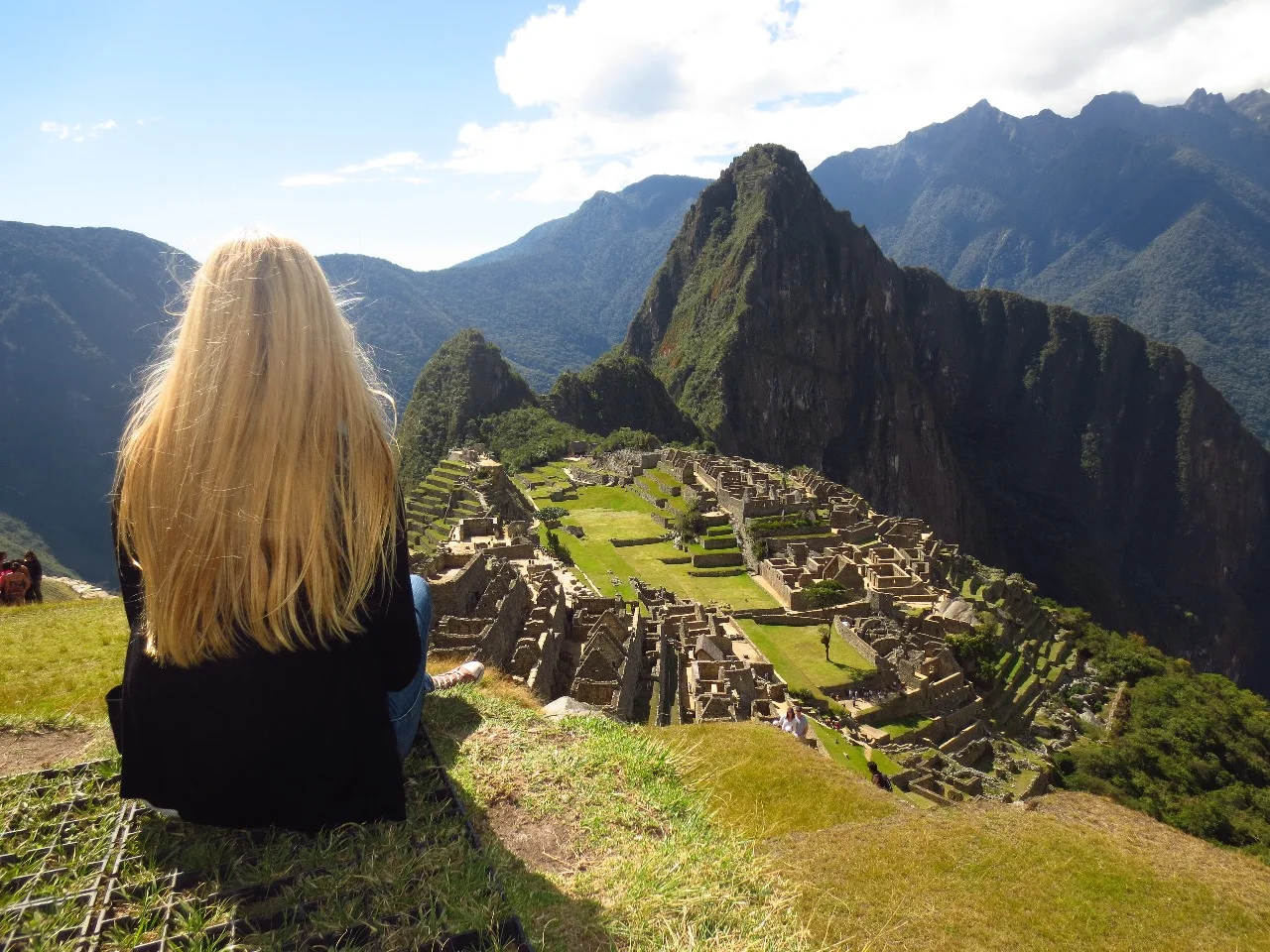
This is the ceremonial way to reach the citadel, and on the right trip it is worth every minute of the early start. Named for the explorer who brought Machu Picchu to the world's attention, the Hiram Bingham is a revival of the 1920s Pullman age, run by Belmond, the same house behind the Venice Simplon-Orient-Express. It leaves the Cusco region late morning and reaches Aguas Calientes in the early afternoon, and from the first step aboard it asks you to slow down.
Brunch is served as the valley narrows around you, in dining cars dressed with white linen, fine china and polished brass, art deco in dark and noble woods. Behind them sits the bar car, a mahogany counter and deep leather chairs, where a guitar and cajon duo play as the Urubamba river keeps pace outside the window. At the very back is an observation car open to the air, where most people end up standing, drink in hand, watching the gorge close in. The truth is that the return leg, after you have walked the ruins, is the better half: cocktails, a long dinner of several courses, the dark valley sliding past and live music the whole way home.
It is for the traveler who wants the arrival itself to feel like an event. Honeymooners take it. So do people marking an anniversary, or anyone for whom the journey is meant to be part of the prize rather than the price of admission. The early departure is real, and you are trading a slow dawn for the most elegant ride in the country. On the trips where that trade is right, nobody ever regrets it.
On the Hiram Bingham, arriving at Machu Picchu stops being logistics and becomes the day's most beautiful hour.
The Vistadome Observatory
If the Hiram Bingham is the occasion, the Vistadome Observatory is the train we put most travelers on, most of the time, and we do it without apology. Run by PeruRail between Ollantaytambo or Cusco and Aguas Calientes, it is the premium panoramic service, and the design does one thing brilliantly: it gets the mountains out of the way of you seeing them. Glass runs along the sides and overhead, so the granite walls and the green river fill the carriage rather than peeking through a porthole.
The Observatory car is the reason for the name. At the rear of the train there is an open balcony where you can stand in the cool wind with the canyon unrolling behind you, and an easy lounge-bar beside it. Some departures include a light presentation of Andean textiles and a brief dance, done with a lightness that never tips into a spectacle you have to endure. It is not the full theatre of the Hiram Bingham and it does not pretend to be. What it is, is beautiful, genuinely comfortable, far less fuss, and looking out at exactly the same gorge.
It suits almost everyone, which is precisely why we recommend it so often. If you want the scenery and the comfort without making the train the centerpiece, and you would rather keep the flexibility of more departure times to fit your day at the ruins, this is the one. Quiet luxury, in the truest sense of the phrase.
The PeruRail Titicaca Train
This is a different proposition entirely, and one of the great high-altitude rail journeys anywhere. The Titicaca Train is the day service between Cusco and Lake Titicaca, and it takes the best part of ten hours, which sounds like a lot until you understand that the hours are the entire point. You are not enduring a transfer. You are spending a day watching Peru change through a window, and being looked after beautifully while you do.
A long lunch is served in the dining car as the altiplano opens out, herds of alpaca, low adobe villages, the vast pale grass of the high plain, climbing to over four thousand meters at the La Raya pass where the country feels like the top of the world because very nearly it is. At the back there is an open-air observation car where the air is thin and cold and the light is enormous, and a bar where a pisco sour arrives as the plain turns gold in the afternoon. There is live music. You step off not into a station but onto the shore of the highest navigable lake on earth.
It is for travelers who have the time and the temperament to prefer the slow, ground-level crossing to a short flight over the top, and who are heading on to Lake Titicaca anyway. Give the country a day and it gives you one back.
The Belmond Andean Explorer
And then there is the journey people build a whole trip around. The Andean Explorer was the continent's first luxury sleeper train, and it is the one we suggest when someone wants something genuinely rare. Belmond again, and the cabins are proper: real beds, en-suite bathrooms, finished in alpaca wool and fine wood, the kind of small private room you are sorry to leave in the morning. The route climbs out of Cusco, crosses the altiplano to Puno on Lake Titicaca and carries on to Arequipa, or runs the other way, along some of the highest passenger rail lines in existence.
There is a dining car with real ambition, a piano bar that fills up after dark, and an observation car open to the night where you can stand under more stars than seem possible with a nightcap and the cold high air. You sleep while the train rests in the lake's silence and you wake to a sunrise over Titicaca, or to the volcanoes standing over Arequipa. The route makes time for the country it crosses, a stop at the lake, a high textile village, the lonely upland where almost no one lives. One or two nights, an unhurried crossing of the Andes that is its own reason for coming.
It is for those marking something, an anniversary, a milestone, a long-promised trip, and for travelers who already understand that the slowest way through a place is often the most luxurious. This is the one we describe, without hesitation, as a destination in itself.
If Machu Picchu should feel like an event, take the Hiram Bingham.
If you want the gorge and the comfort without the ceremony, and flexible timing, take the Vistadome Observatory.
If you are going to Titicaca and have a whole day to give it, take the Titicaca Train.
If the train itself is the trip, take the Andean Explorer.
Most of the journeys we design use two of these, and we will tell you which, and why, when we plan yours.
We arrange all four as part of private itineraries, and the practical side, the departure station that shifts with the rainy season, the entry timings, the connections on either end, is ours to solve, not yours to worry about. What we wanted to give you here is the feeling, because that is the part the schedules leave out. Tell us what kind of traveler you are, and we will put you on the right train.