







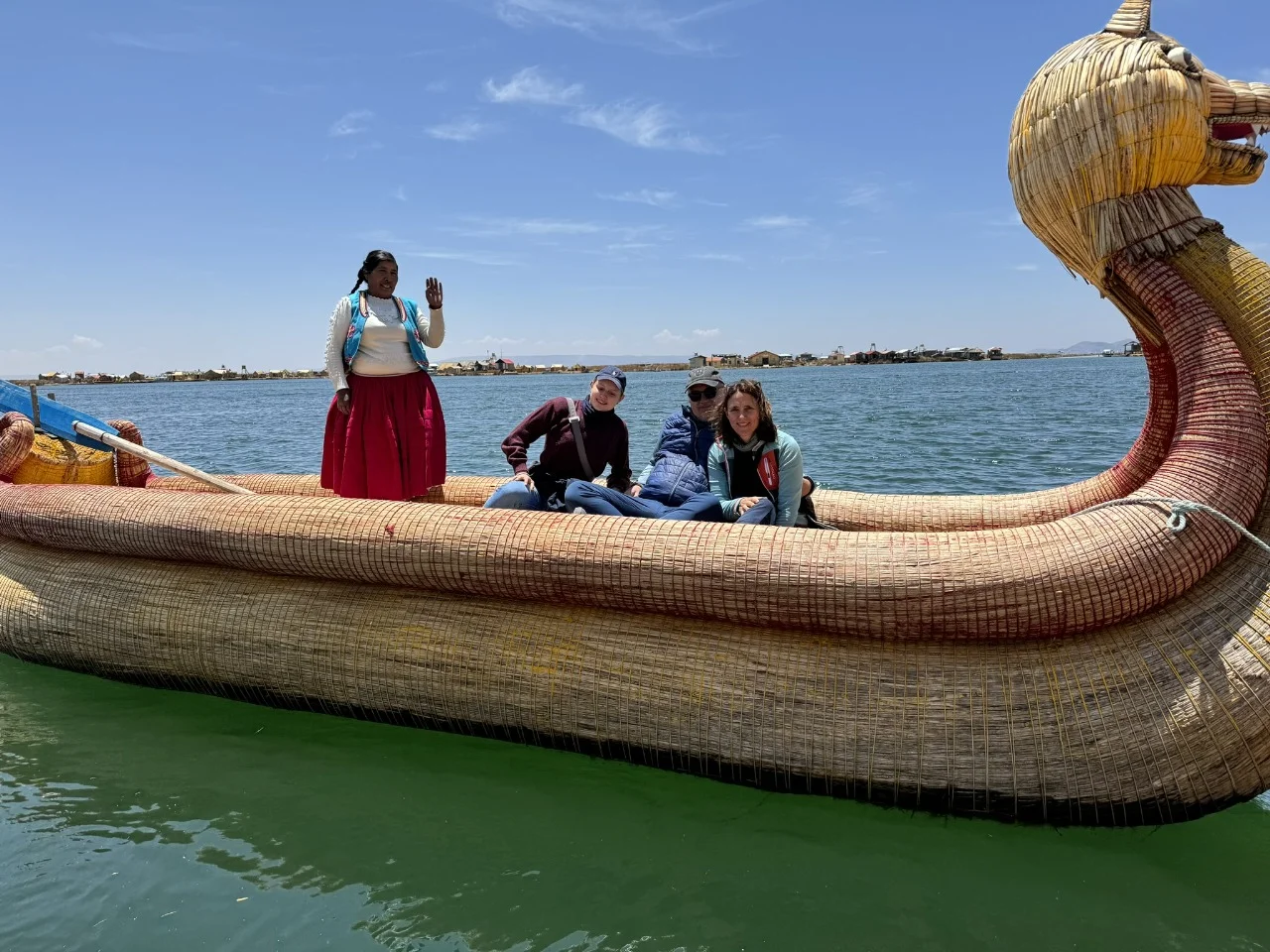
There is a particular quality of light on Lake Titicaca that people remember for years. At nearly three thousand eight hundred meters, the highest navigable lake on earth sits under an enormous sky, the water a hard, luminous blue, the air thin and clear and the silence almost total. It feels like the edge of the world, and for many travelers it becomes the quiet, unexpected favorite of the whole trip, the place where Peru slows down completely.
Titicaca is also frequently done badly: a rushed half-day boat tour to the most crowded reed islands and back, and onward. Treated that way it disappoints. Given a little time, the right base and the right way onto the water, it is something else entirely. Here is how we approach it.
Why give it the time
What makes Titicaca extraordinary is not a single monument but an atmosphere, and the living cultures of the water. This is a high, ancient, deeply traditional corner of Peru, where island communities still weave, farm and fish much as they have for centuries, and where the scale of the lake and the sky resets something in you. It rewards stillness rather than ticking sights, which is exactly why it suits the way we like to travel.
One practical note matters here. Titicaca is the highest place most travelers will sleep on a Peru trip, higher than Cusco, so it belongs later in the journey, after you have acclimatized in the valley and the city, not on a first or second day. Sequenced well, it is a serene high point. Sequenced badly, it can be a hard one. We always place it with that in mind.
Where we stay
The right base transforms the lake. Titilaka is the standout, a design-led lodge on its own private peninsula with floor-to-ceiling views of the water, all-inclusive and quietly guided, where the days are built around private excursions and the evenings around the silence and the stars. It is the choice for travelers who want to feel held in real comfort at this altitude, with the lake at the foot of the garden.
For something more remote, Suasi sits on its own small private island in a quieter, far less visited corner of the lake, an eco-lodge for those who want solitude and the water on every side. And for travelers arriving or leaving by luxury train, the lake pairs beautifully with the rails, which is a pleasure in its own right. Which base suits you depends on how much solitude you want and how you are arriving, and we will steer you to the right one.
It feels like the edge of the world, and often becomes the quiet, unexpected favorite of the whole trip.
The islands, done right
The famous Uros, the floating islands built from totora reeds, are genuinely remarkable, and also the most visited and most performed-for part of the lake. The difference between a disappointing visit and a moving one is entirely in how it is arranged: a private boat, the right hour, and the less-trafficked communities rather than the ones the day boats descend on. Done quietly, stepping onto a soft, springing island of woven reed remains one of the strangest and most memorable things in Peru.
Further out lie the real treasures. Taquile, where the men knit and the community's textiles are recognized as a heritage of humanity, is a slow, beautiful island of stone paths and astonishing views. Amantani is quieter still, and a respectful community visit there, arranged with people we know, gives you a genuine encounter rather than a staged one. We build the islands around the authentic and the unhurried, with a private boat and time to linger, which is the whole difference.
Getting there
Most travelers reach the lake by a short flight into Juliaca, simple and quick. But the more memorable way, if you have the time, is to come by train across the altiplano, a full day of high plains and enormous light that we wrote about in the great train journeys. Arriving at the lake by rail, stepping off at the water rather than at an airport, frames the whole place perfectly, and the journey south can carry on to Arequipa and the Colca Canyon aboard the sleeper.
How we do it
Titicaca done well is a matter of three things: giving it at least two nights so it can breathe, placing it late in the trip for the altitude, and getting onto the water privately and away from the crowds. We choose the lodge to fit you, arrange the private boats and the community visits with people we trust, and sequence the lake so it lands as the serene high point it should be rather than an exhausting afterthought.
Tell us how much solitude you want, and we will shape the lake around you.