





Setting
On the Pacific coast
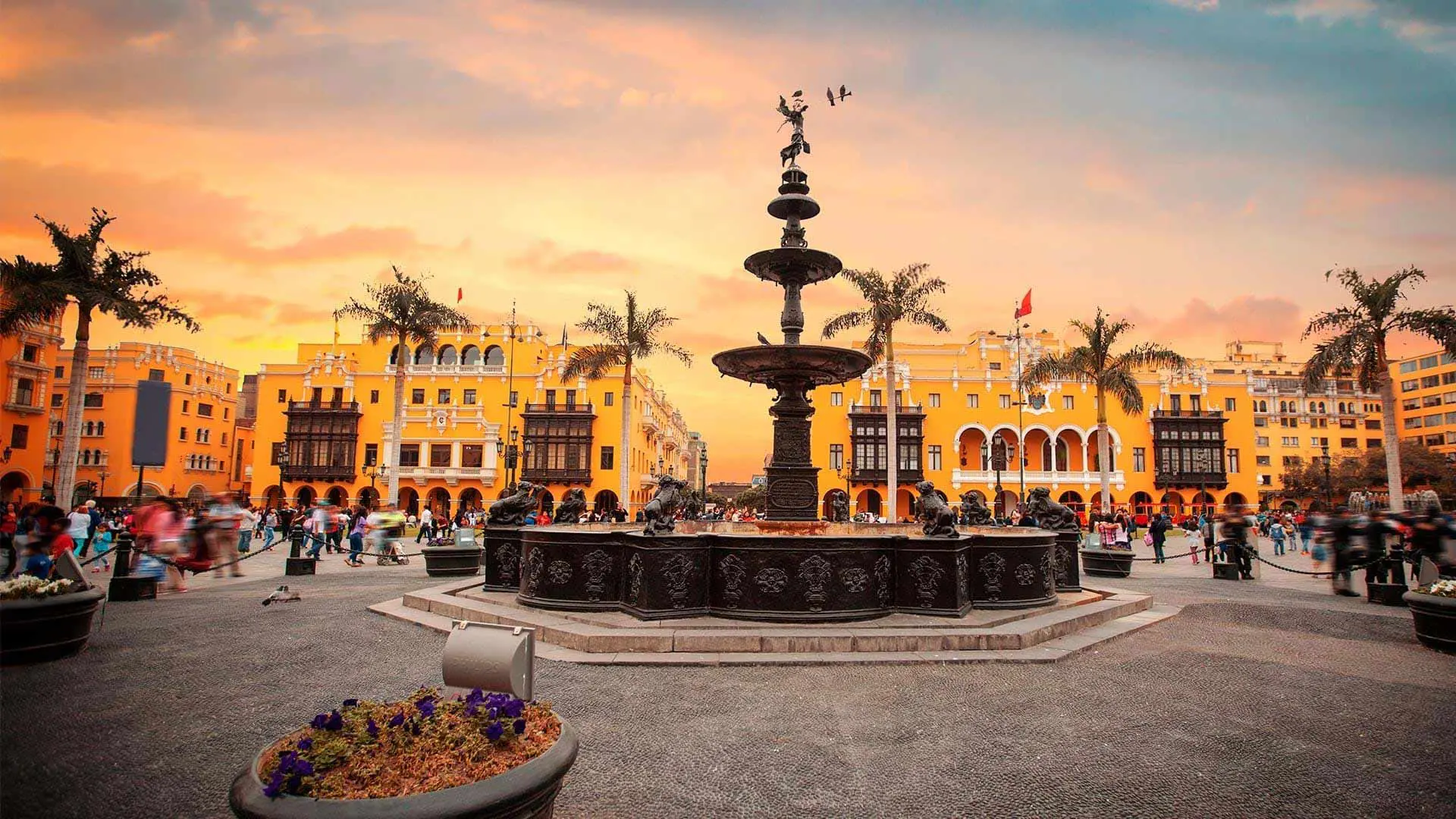
The capital on the Pacific, the gateway to Peru, and the finest place to eat in South America. Most travelers pass through, the wise ones stay a night or two. Here is why, and how to do it well.
Founded in 1535 and once the seat of Spanish power in South America, Lima spreads along the desert coast where the Andes meet the Pacific, a sprawling capital of ten million wrapped in sea mist for half the year. For a long time travelers treated it as a place to land and leave. Then its kitchens changed the conversation, and the city now holds several of the world's very best restaurants, the names that top the global lists, fed by the richest cold-water fishery on earth and a culinary culture that fuses Andean, Spanish, African, Chinese and Japanese into something entirely its own.
But the food is only the headline. There is a handsome colonial old town, two of the best pre-Columbian museums anywhere, the bohemian art quarter of Barranco, and a string of clifftop parks where the city looks out over the surf and the paragliders. Give Lima a day or two at the start or end of your trip and it more than earns them. This is the guide.
Lima rewards the traveler who slows down for it. These are the corners we build a private day or two around.
The bohemian quarter, all painted mansions, murals and galleries, the Bridge of Sighs and the best bars in the city, loveliest in the late afternoon.
Clifftop parks running for miles above the Pacific, paragliders overhead, the surf below, and the city at its most relaxed.
The Plaza Mayor, the Cathedral and the catacombs beneath San Francisco, a grand colonial core and a UNESCO World Heritage Site.
Pre-Columbian gold, ceramics and textiles in a beautiful old mansion and garden, the finest collection of its kind in the country.
A great adobe pyramid rising in the middle of Miraflores, a reminder that the city stands on cultures far older than the Inca.
Ceviche, Nikkei and the pisco sour, the markets and the world-class dining rooms, the reason Lima is now a destination in its own right.
The honest, practical detail for the city where almost every Peru trip begins.
Lima is Peru's front door. Jorge Chavez International Airport, recently expanded with a large new terminal, is the country's main gateway, and the great majority of international flights land here before anyone goes on to Cusco, the Amazon or the coast. The airport sits in Callao, a little apart from the smart coastal neighborhoods, so we always meet you on arrival and transfer you privately rather than leave you to the taxi line.
Because almost every domestic route runs through Lima, it makes natural sense to spend a night here at the start of a trip, the end, or both, which also turns an unavoidable connection into the best dinner of the holiday.
Lima has a climate all its own. The coastal summer, from December to April, is warm, bright and the sunniest time to enjoy the cliffs and the sea. The rest of the year, from roughly May to November, brings the garua, a soft gray sea mist that sits over the city and mutes the light, cool but very rarely wet, since this is true desert and it almost never rains.
The good news is that the food, the museums and the neighborhoods are wonderful in any weather, so Lima works year-round. If you are chasing blue skies and a beach mood, come in the southern summer. If you are here for the table, the season hardly matters.
This is the single best reason to linger. Lima is consistently ranked the finest dining city on the continent, home to restaurants that regularly place among the world's fifty best, Central and Maido among the names that have topped the global list. Peruvian cuisine draws on an extraordinary larder, the cold Humboldt current offshore, three thousand varieties of potato in the highlands, and waves of Spanish, African, Chinese and Japanese migration that gave the world ceviche, Nikkei and chifa.
The tasting menus at the top tables book out weeks or months ahead, and securing them is part of what we do. But the city eats just as joyfully at the other end, a hole-in-the-wall cevicheria, a market stall, a pisco bar at dusk, and the best days mix the two. See our full gastronomy experience for how we build a trip around the table.
One full day and night covers the essentials, the old town, a museum, a clifftop walk and a great dinner, and slots neatly into the start or end of a trip. Two days lets the food come into its own, a long lunch and a tasting menu, time in Barranco, and a slower read of the neighborhoods. For travelers who love to eat, Lima can happily fill three. We usually place it at both ends of a Peru itinerary so the connection days do double duty.
Stay on the coast. Miraflores is the most convenient base, safe, walkable and right on the clifftops, with easy reach of the restaurants and the sea. Barranco, just south, is more bohemian and atmospheric, full of art and good bars, and lovely if you want character over convenience. San Isidro is the quiet, leafy, upscale choice. We work across the finest four and five star houses in all three and match the right neighborhood to how you want to spend your time.
A connection city for most, an event for our travelers.
We hold reservations at the world-class dining rooms months ahead, and pair them with the small, soulful places only locals know.
Your own guide through the old town, Barranco and the pre-Columbian museums, so a day in Lima is a real introduction to Peru, not a layover.
Stays in Miraflores or Barranco, on the cliffs and close to the table, with private transfers from the moment you land.
For the food-curious, a private market visit and a cooking session, or a behind-the-pass look at a kitchen that has changed how the world sees Peru.
As the country's gateway, Lima opens most of our itineraries, and anchors any trip built around the food. A few good places to start:
Lima is the heart of Peru's gastronomy scene. Build a whole journey around the table.
Quiet hours, private archaeologist guides, and luxury suites overlooking the scenery.