




Two worlds
Cloud forest and coast
Cloud-forest citadels older than Machu Picchu, and a desert coast of vast pyramids and royal gold. The richest archaeology in the country, and the part of Peru almost no traveler ever sees.
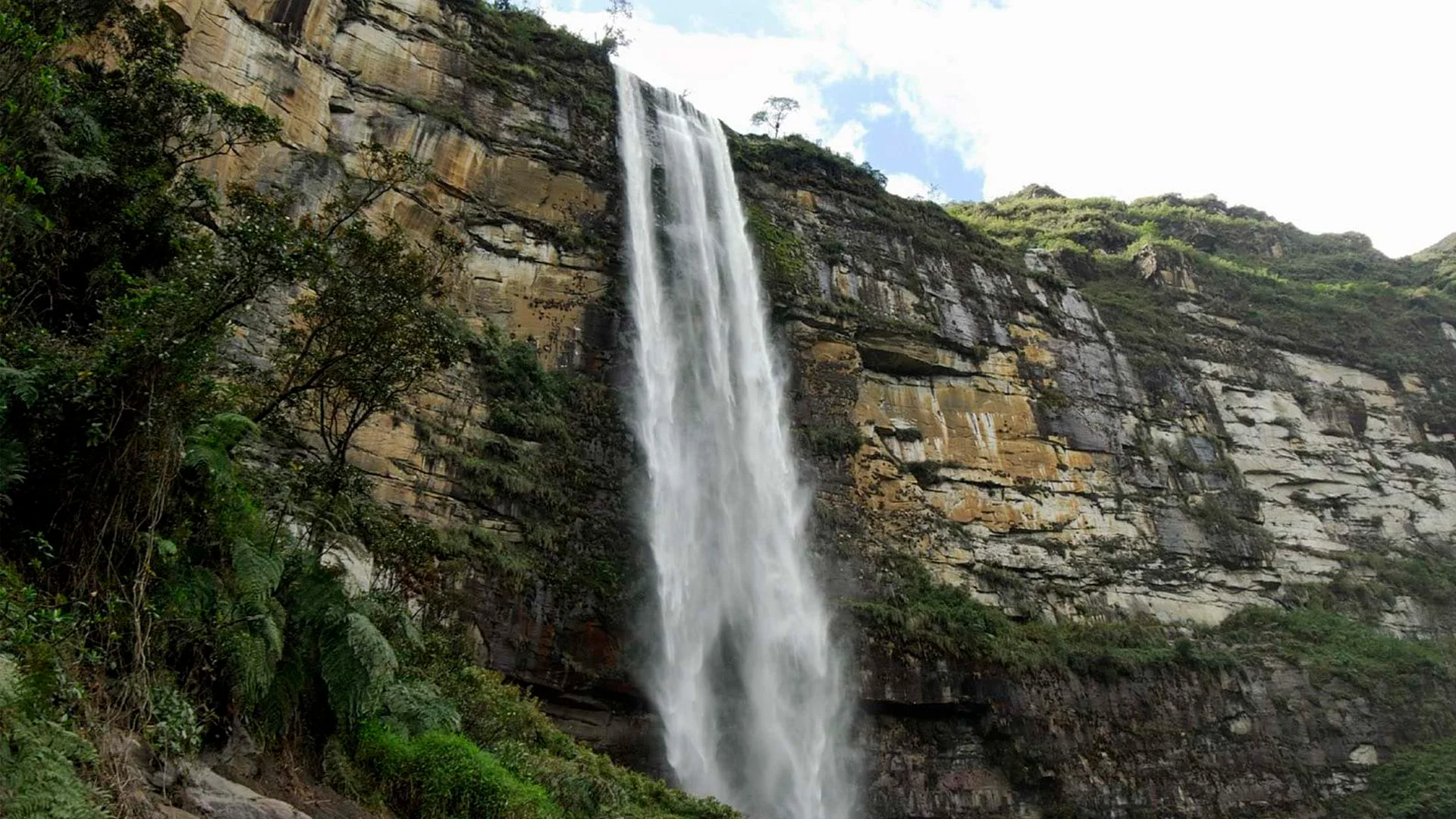
While the world goes south to Cusco, the north keeps its treasures to itself. In the cloud forests of Chachapoyas, a people the Inca called the cloud warriors raised a stone citadel, Kuelap, on a high ridge centuries before Machu Picchu, ringed it with walls taller than houses, and laid their dead in sarcophagi standing on cliff ledges and tombs cut into sheer rock. Waterfalls fall hundreds of meters through the mist, and orchids and hummingbirds crowd the forest.
Down on the desert coast lies the other north, the cradle of Peru's great pre-Inca civilizations. Here the Moche painted their pyramids and buried their kings in turquoise and gold, the Chimu built the largest adobe city on earth, and the Sican raised valleys of pyramids in the dry forest. The tomb of the Lord of Sipan, found intact, is spoken of as the Tutankhamun of the Americas. Together, cloud forest and coast, this is the most rewarding and least crowded corner of the country. This is the guide to it.
Two regions, the cloud-forest highlands and the desert coast, each with sights that rival the famous south.
The great walled citadel of the Chachapoya on its high ridge, older than Machu Picchu and rarely crowded, reached by a cable car and a short walk through the cloud forest.
One of the tallest waterfalls in the world, plunging in two great tiers through the forest, reached on a beautiful half-day walk past orchids and hummingbirds.
Tall clay funerary figures of the Chachapoya, standing in a row on a cliff ledge above the valley, watching over the dead for six centuries.
The largest adobe city ever built, a vast walled capital of the Chimu near Trujillo, its courtyards carved with friezes of waves, fish and seabirds.
The pyramids of the Sun and Moon near Trujillo, their inner walls still bright with painted murals of the fanged Moche gods.
The royal Moche tomb of the Lord of Sipan in its Chiclayo museum, found laden with gold, and nearby Tucume, a whole valley of adobe pyramids.
The honest, practical detail for the country's last frontier of travel.
The north is large and its sights are spread out, which is exactly why so few people make it here, and why it stays so uncrowded. For the cloud forest of Chachapoyas, the usual way in is to fly from Lima to Jaen, around an hour and a quarter, then drive several hours into the mountains. For the archaeological coast, you fly to Trujillo or Chiclayo, each around an hour and a half from Lima, with the great sites close to each city.
You can do the coast on its own as a short, easy archaeological trip, or combine it with Chachapoyas for a fuller exploration of the north, which involves more driving but rewards it richly. We plan the route, the flights and the long mountain roads so the logistics never get in the way of the wonder.
This is the north's wild heart. The Chachapoya, the people of the clouds, built fortresses, terraces and elaborate burial sites across a green, mist-wrapped highland that feels a world away from the dry coast. Their masterpiece is Kuelap, a vast oval citadel walled in limestone on a ridge above the Utcubamba valley, raised over many centuries and holding hundreds of round stone houses. It is older than Machu Picchu, just as dramatic, and you may have it almost to yourself.
Around it lie the rest: the cliff-ledge sarcophagi of Karajia, the painted cliff tombs of Revash, the mummies and artifacts gathered at Leymebamba, and the towering Gocta falls. It is a place for travelers who want discovery over crowds, and a little adventure in their comfort.
The north coast is the birthplace of pre-Inca Peru, and three great cultures left it extraordinary things. Near Trujillo, the Moche built the painted pyramids of the Sun and the Moon, and the Chimu raised Chan Chan, the largest adobe city the world has ever seen, a labyrinth of walls carved with the sea. Near Chiclayo, in 1987, archaeologists opened the undisturbed tomb of a Moche ruler, the Lord of Sipan, and found him buried in gold, turquoise and feathers, a discovery so rich it is compared to Tutankhamun. Nearby, the valley of Tucume holds twenty-six pyramids of the Sican.
It is the densest concentration of pre-Columbian wonder in Peru, and because it sits off the classic trail, you explore it in near solitude, with the murals and the gold almost to yourself.
The two norths have different weather. The coast, like the rest of the Peruvian shore, is dry and warm for much of the year, with the brightest, hottest months from December to April, and it can be visited at almost any time. The Chachapoyas cloud forest is, by nature, often cloudy and damp, with the drier and clearer window running roughly from May to September, which is the better season for the highland sites and the walking, though a little mist is part of the magic.
For the coast alone, two to three days around Trujillo and Chiclayo cover the major sites comfortably. Add Chachapoyas, with its drives and its highlights, and you want four to six days for the north as a whole. Lodging here is more modest than in the south, this is frontier travel, but there are genuinely characterful country lodges near Chachapoyas and comfortable boutique hotels in the coastal cities. We choose the best available and handle the rest, so the remoteness is felt as romance, not hardship.
A region this rich and this remote needs real expertise to unlock, which is exactly where we come in.
For the traveler who has done the south, or who simply wants discovery over crowds, the north is the great untrodden chapter, and we know it intimately.
Cloud-forest citadels and coastal pyramids in one considered route, with every flight and mountain road handled.
Moche, Chimu, Sican and Chachapoya are a tangle without a great guide. Ours bring four lost civilizations to life.
The best lodges and hotels the north offers, chosen with care, so remote never means rough.
The north is specialist territory, joined to the classic south in our grand tour or explored on its own. A few good places to start:
The north is for the curious traveler who wants Peru beyond the famous south. Tell us, and we will build it for you.
Quiet hours, private archaeologist guides, and luxury suites overlooking the scenery.